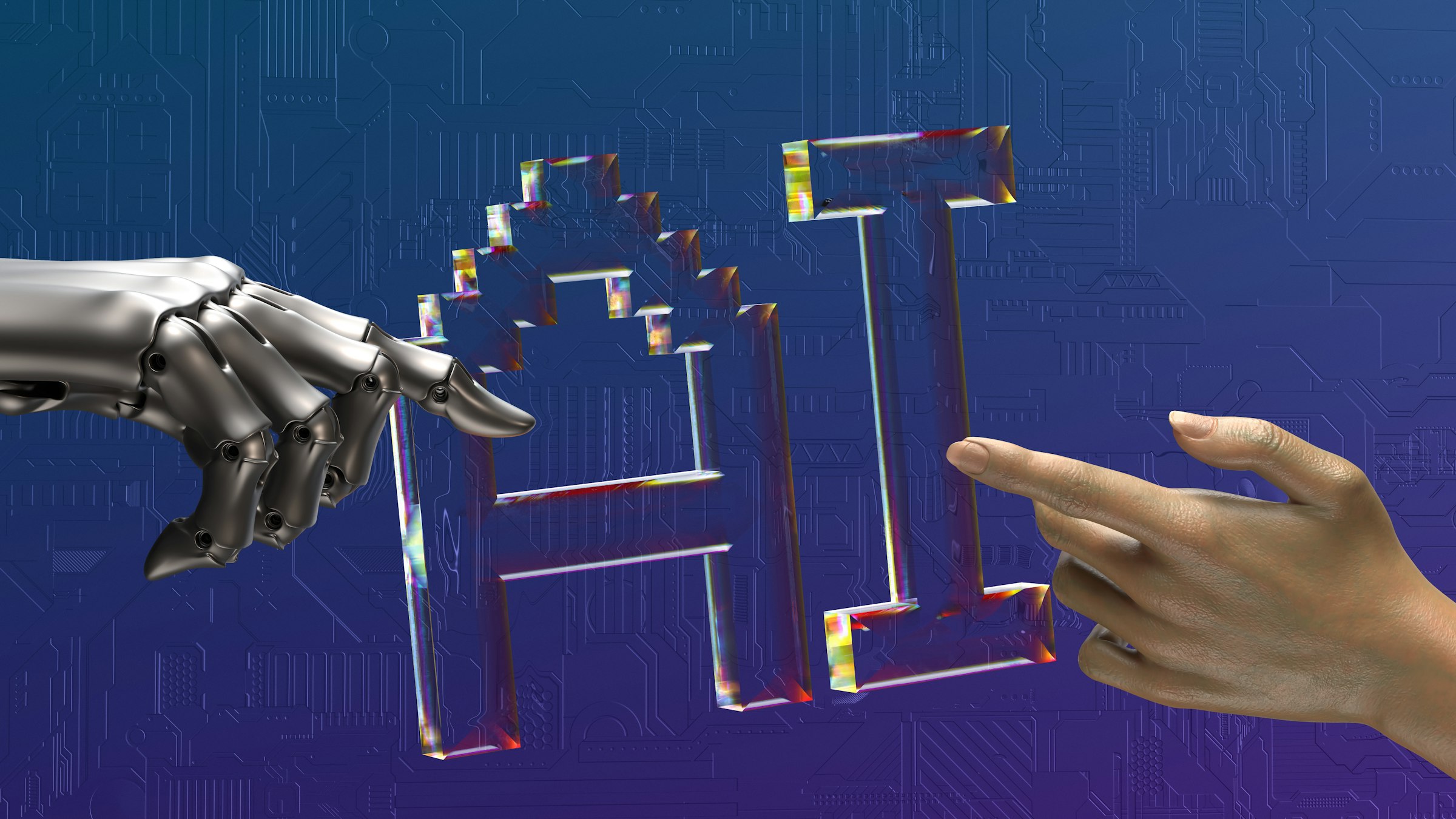
Ever since generative AI tools entered the daily life of agile teams, one question comes up in every refinement: can AI estimate our user stories for us? The honest answer is no. But planning poker with AI is already a useful reality, provided you understand what the machine does well, and what it will never replace.
Planning poker, in two sentences
Planning poker is a collaborative estimation technique where each team member simultaneously reveals a card representing their assessment of a story's effort. Gaps trigger a discussion, and it is that discussion, more than the final number, that creates the value. If you are just starting out, our complete guide to planning poker rules covers the basics, and the article on story points explains the unit of measure.
Above all, remember this: planning poker does not exist to produce a number. It exists to surface disagreements before development, when they still cost nothing.
What AI changes (and what it does not)
AI applied to agile estimation analyses historical data: past story descriptions, acceptance criteria, actual effort observed. From these patterns, it suggests a range of points for a new story that resembles older ones.
That is valuable, but limited by nature.
AI changes three things:
- Preparation. It turns a vague story into a testable one before the session even starts.
- The starting point. It provides a neutral numerical reference, useful for young teams that lack a shared history.
- Consistency. It flags when a new estimate contradicts similar stories already delivered.
AI does not change the essential part: it does not know your team's tacit context. It ignores that this particular module has known technical debt, that the colleague who masters this service is going on leave, or that the client changed their mind yesterday. That knowledge lives in the discussion, not in the data. An AI that "estimates for you" removes precisely the step that gives planning poker its value.
The golden rule fits in one sentence: AI proposes, the team decides.
Combining planning poker and AI, in practice
Here is a three-step flow that integrates AI without short-circuiting collective intelligence.
Before the session: prepare the context
This is where AI brings the most value, and the least risk. Before refinement, you run each candidate story through an assistant to:
- rephrase the story into a standard format and check that it is testable,
- generate a first list of acceptance criteria for the team to validate,
- flag the areas of uncertainty that will deserve discussion.
An effective prompt looks like this:
"Here is a user story and its context. Rephrase it in the 'As a / I want / so that' format. List 4 to 6 verifiable acceptance criteria. Identify the 3 main sources of technical or functional uncertainty that could make the estimate vary."
You arrive at the session with clean stories. The time saved is not spent voting faster, it is reinvested in discussing the real disagreements. This is exactly the spirit described in our concrete workflows of an AI-assisted PO.
During the session: AI as a reference point, never as a judge
During the vote, AI stays in the background. Two healthy uses:
- Optional anchor. If the team is completely stuck on a story with no history, the AI's suggestion can unblock the discussion, provided you reveal it after the first round of cards, never before. Revealed too early, it biases the vote and destroys the independence of the estimates.
- Memory of history. When a gap appears, asking "how much did we estimate the OAuth login story last quarter?" gives a factual reference point useful to the debate.
The danger to name clearly: if the team systematically adopts the AI's number, you no longer have planning poker, you have data entry. Votes go silent again and disagreements stop surfacing.
After the session: capitalise
After the sprint, comparing estimated against actual feeds the model for next time. AI excels at detecting recurring biases: a systematic tendency to underestimate stories touching a specific module, point inflation under deadline pressure. Presented in the retrospective, these signals improve the team without ever stripping it of its decision.
AI-assisted or human voting: what to keep from each?
| Dimension | Human voting alone | AI estimation alone | Planning poker with AI |
|---|---|---|---|
| Team tacit context | Strong | Absent | Strong |
| Consistency with history | Weak | Strong | Strong |
| Surfacing disagreements | Strong | None | Strong |
| Speed of preparation | Slow | Fast | Fast |
| Risk of collective bias | Medium | High (black box) | Controlled |
The right combination does not pick a single column: it takes preparation and consistency from AI, and keeps the decision and the discussion with the team.
Pitfalls to avoid
- Revealing the AI's suggestion before the first vote. You destroy the independence of the estimates, which is the whole point of the method.
- Treating the AI's range as truth. It is a hypothesis based on the past, not a measurement. A brand-new project or an unfamiliar technology makes it unreliable.
- Automating into silence. If nobody discusses anymore, you have gained time and lost the reason the ritual exists.
- Forgetting confidentiality. Before sending tickets to a third-party service, check what you are allowed to share.
Frequently asked questions
Can AI replace planning poker? No. It can prepare stories and provide a numerical reference, but it does not surface disagreements nor know your team's context. It assists the ritual, it does not replace it.
When should the AI suggestion be introduced in a session? After the first round of cards, never before. Revealed too early, it anchors the votes and removes their independence.
Do you need a paid tool for planning poker with AI? No. You can use a free, no-signup voting tool for the session, and a general-purpose AI assistant to prepare the stories beforehand.
In summary
Planning poker with AI is not a distant future, it is a practice available today. Its value does not come from an AI estimating for you, but from a clear division of roles: AI handles preparation and historical consistency, the team handles discussion and decision. Keep that division, and you save time without losing collective intelligence.
Want to put this into practice at your next refinement? Create a free planning poker session, no account needed, and focus your team's time where it truly matters: the discussion.